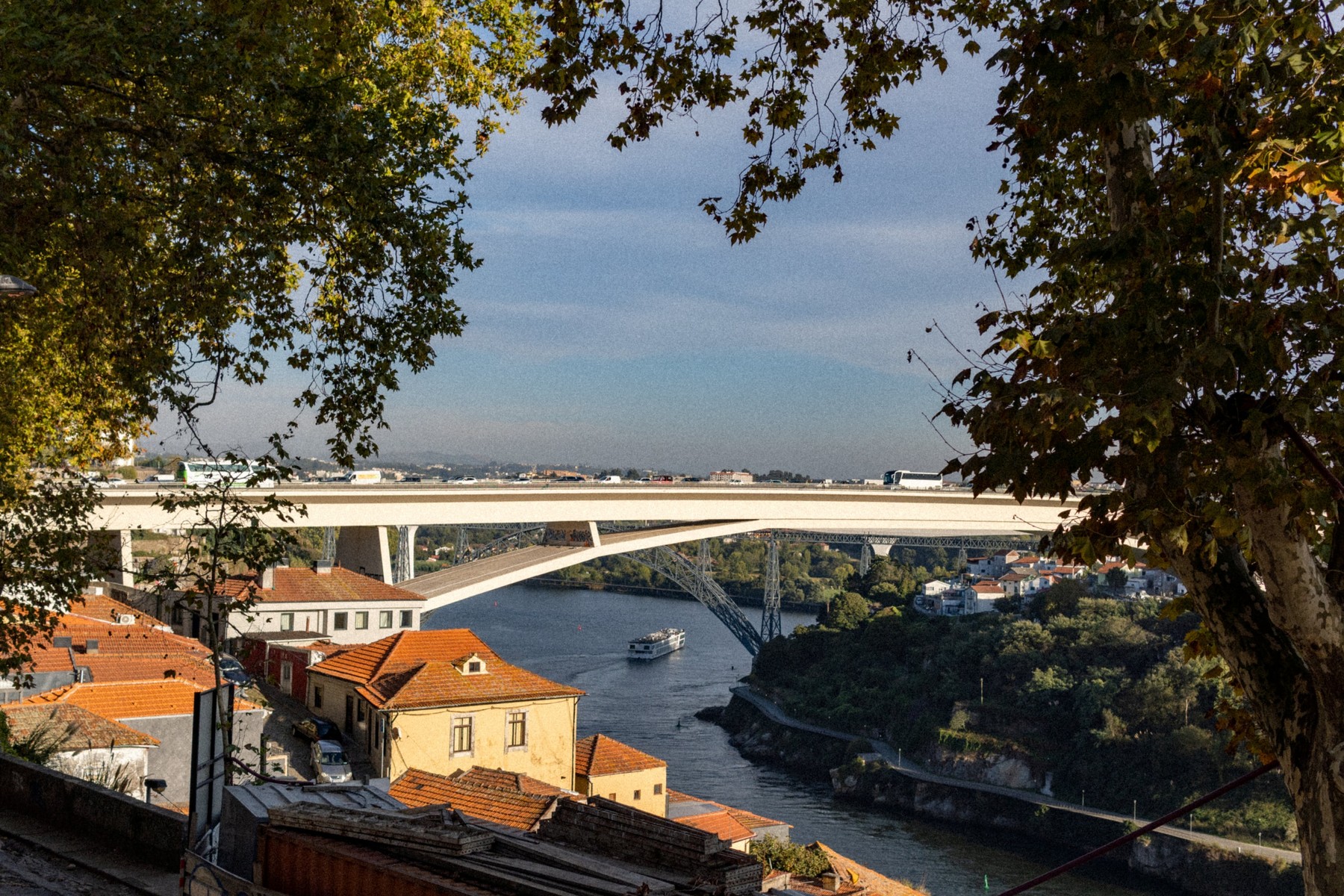
Arriving, badly
I boarded sick. Not dramatically sick, just sick enough to be a liability in an enclosed space, so I wore a mask the whole flight out of something between courtesy and guilt. When the plane began its descent, my ears declined to come with it. Nothing popped. Not on the way down, not on the tarmac, not in the car, not for most of the day that followed. I have flown a great many times, on a great many airlines, and this was – without close competition – the most painful flight of my life.
Porto, for its part, was not interested in my ears. The apartment couldn’t do an early check-in, which is entirely reasonable and which I took entirely personally. So the first hours of the trip were a pharmacy, a box of something with a long name and a short list of side effects, and a bench in the little park behind the Clérigos tower, backpack between my feet, the city arriving at me through what sounded like a closed door.
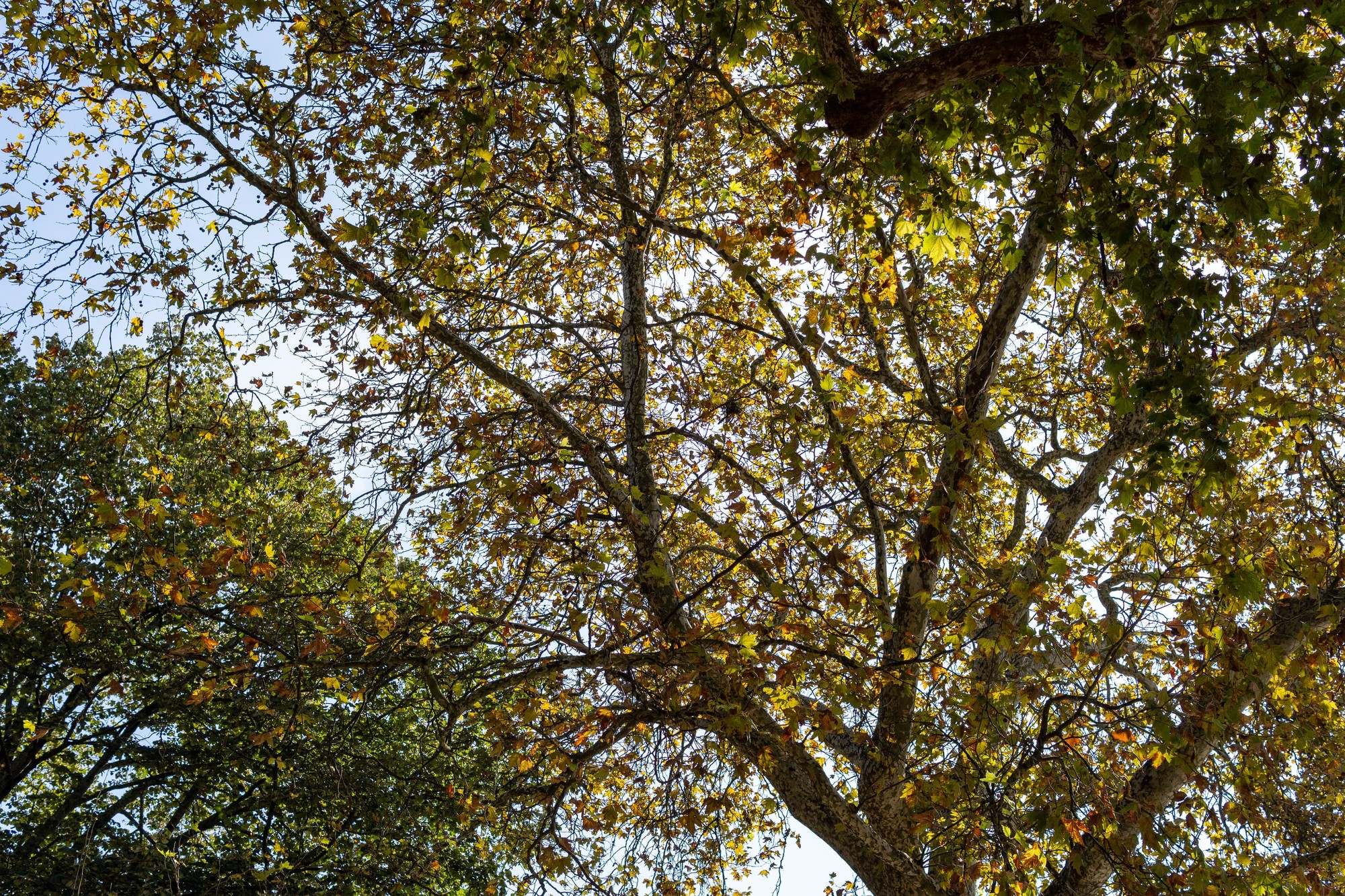
I stayed there a long time. I listened to the tour groups go by – one guide, then another a few metres behind, then another – each of them telling the same square the same story in a different language, and each group turning their heads at the same moment towards the same tower, like a field of sunflowers that had paid for the privilege. I took pictures of the trees mostly because pointing the camera up meant not having to move my head.
Then my friend arrived, and the day remembered it was supposed to be a holiday.
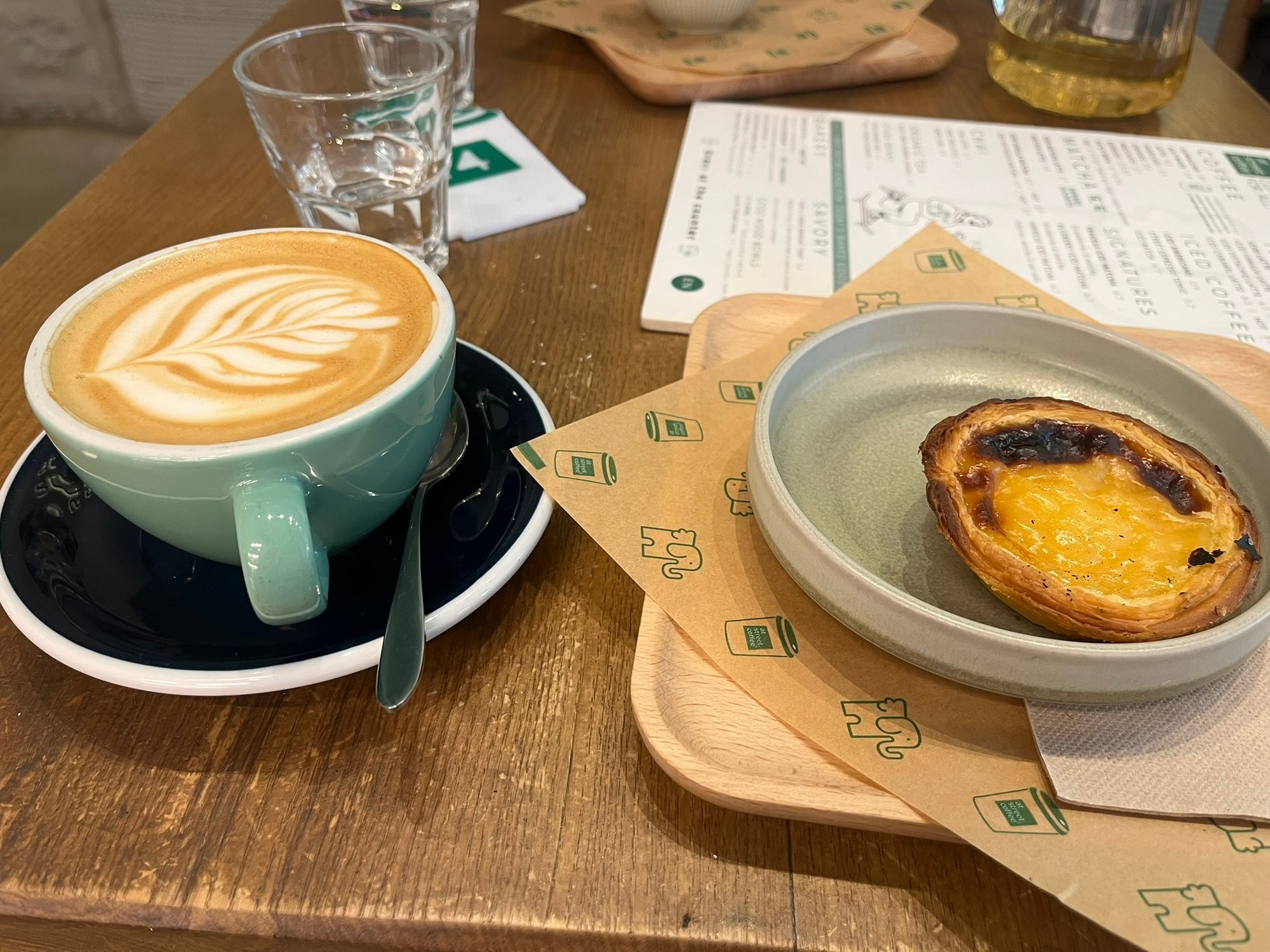
She’d found croissants on the way from wherever she’d come from – properly good ones, the kind that leave the front of your jacket looking like evidence – and we went round the corner to At Street, a café with a green neon sign and a wall of coffee tins, where she photographed her pastel de nata before eating it and I photographed her photographing it. That, roughly, was how the next three days went.
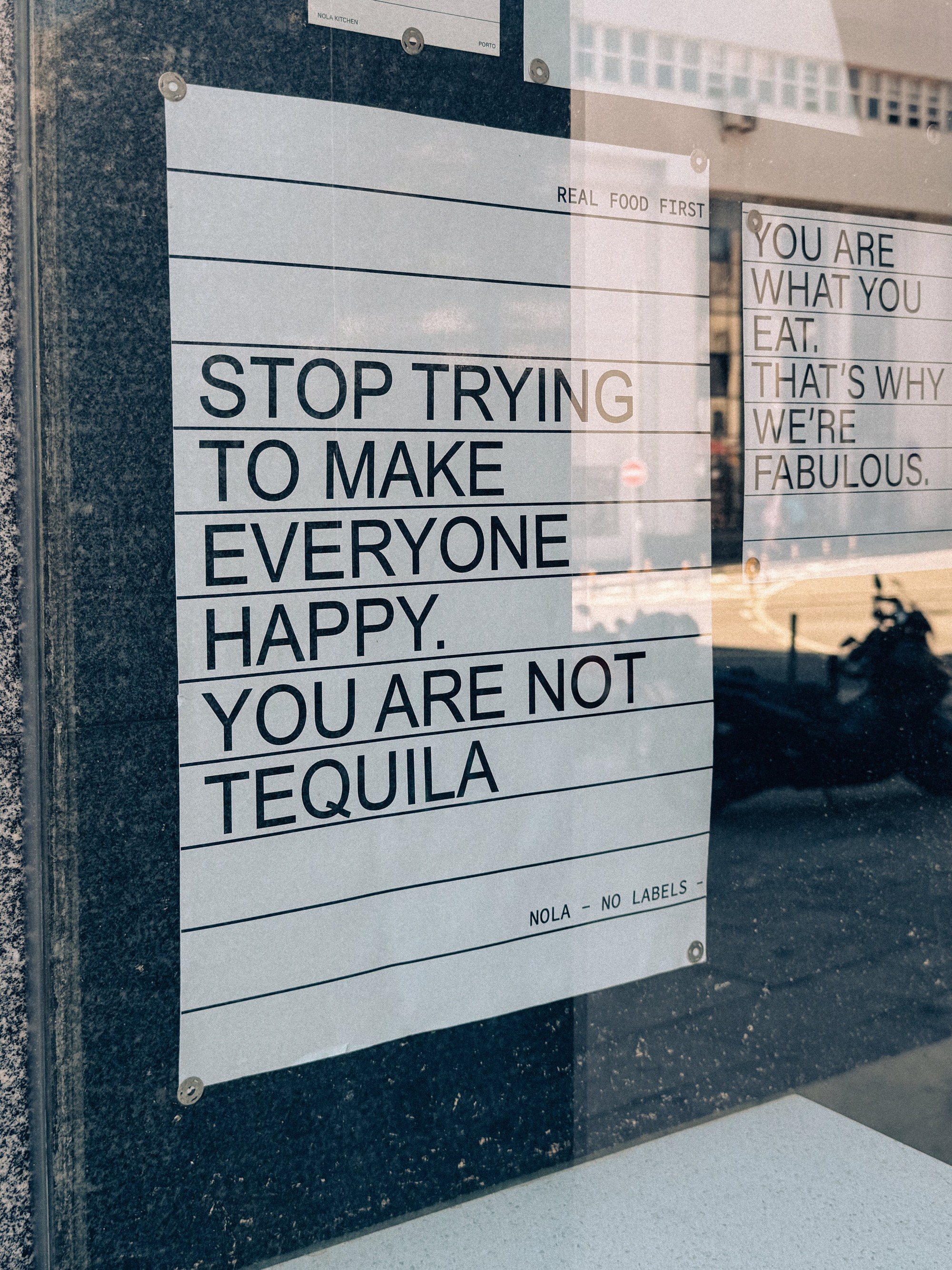
The plan for Friday was to take it slow, and Friday was happy to oblige. We walked east, more or less in the direction of lunch, past a shop window that had opinions about my life choices, and up Santa Catarina to the Capela das Almas, which is a whole church wearing its tiles on the outside: saints and martyrs in cobalt from the pavement to the roofline, so blue that the sky above it looks rinsed.


Lunch was supposed to be Mozambican. There’s a place out in Campanhã, Tia Orlanda, that I had been thinking about since before the flight, because I hadn’t eaten Mozambican food that I didn’t cook myself in a very long time, and there is a particular hunger that only that cures. We walked out past the Bonfim church to get there and found it closed. Orlanda’s other business, an African souvenir shop two doors down, was closed too. We stood on the pavement for a moment as if we had been stood up by a building.
So we ate at Espécie instead, a vegetarian place back in Baixa. It was fine. The food was fine. It was not anything to write home about, which, I realise, is exactly what I’m now doing.
Portugal is complicated for me in a very specific way. Mozambique was Portugal’s for the better part of five centuries, and a great deal of what I grew up inside came off ships from here: not only the buildings, though the buildings too, but the civil scaffolding of a place – how paperwork is shaped, how a ministry is arranged, how a queue behaves, what a notary’s office smells like. This wasn’t my first time in Portugal, so none of it was a revelation. It still arrives every time. You turn a corner and the body recognises something – a doorway, a municipal blue, the way a man behind a counter says pois – before the mind has had a chance to decide how it feels about recognising it.
And then there is the language, which goes the other way entirely. In Berlin I live with a small, tired interpreter in my head who runs every exchange twice, once in German and once in what I actually meant. Here he got the weekend off. I could ask the pharmacist what was in the box, ask the waiter what the soup was, ask the driver where he’d send his own mother for lunch, and get answers in a language I didn’t have to unpack. Asking about small things is most of what travelling is. It turns out I’d been doing it with one hand tied behind my back for years.
People were warm. Not warm-for-the-tourists, but warm. I’m not going to pretend Portugal doesn’t have racism – it absolutely does, and the history I just described doesn’t make that simpler, it makes it older. Both things are true, and I don’t have a way to make them sit still together. What I can tell you is that across three days I didn’t have a single bad interaction, and after Germany that was a reprieve I hadn’t quite realised I was owed.
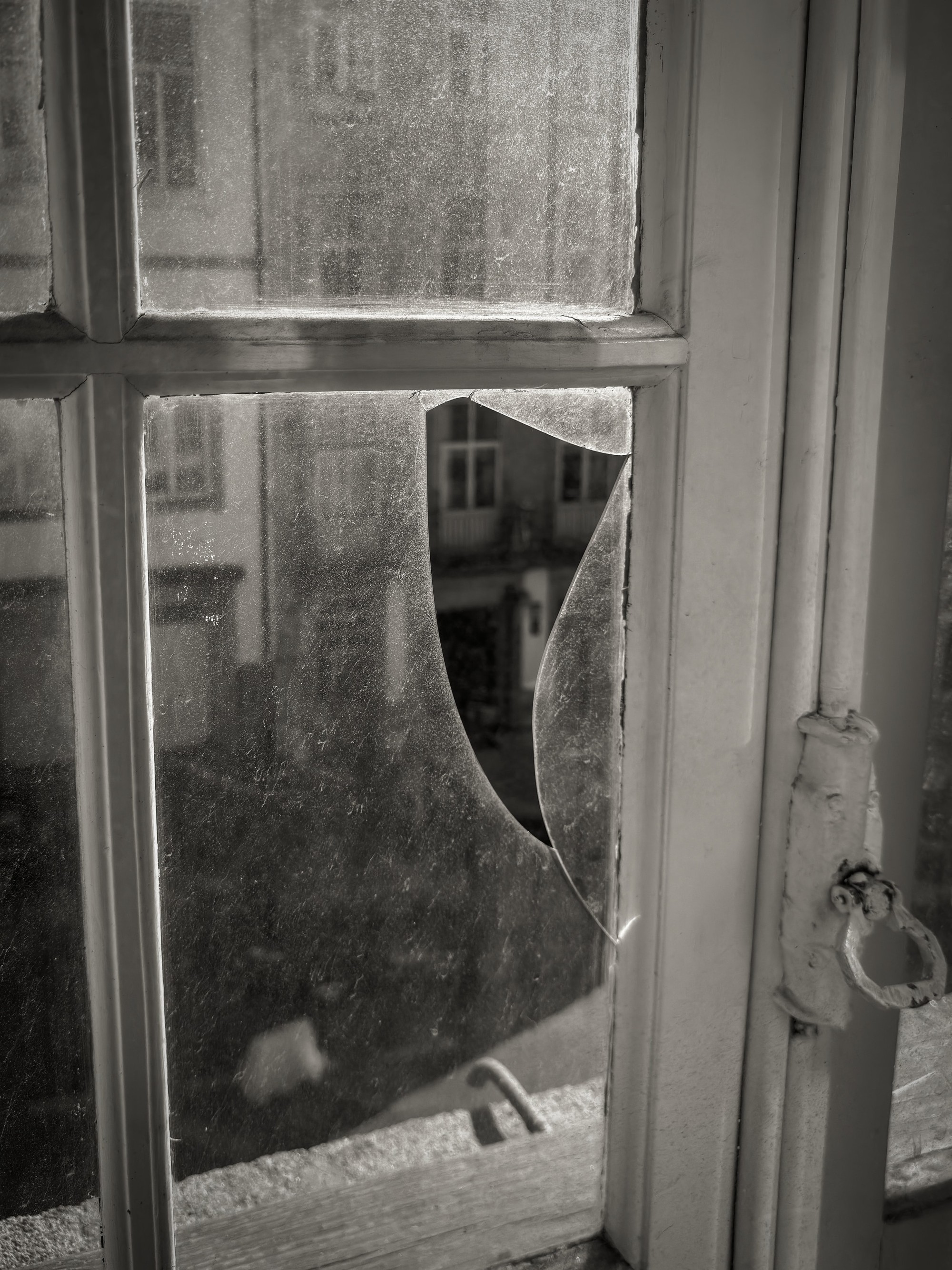
We finally got the entry codes in the late afternoon: keyless entry, no keys to hand over. The apartment was very, very central, which also meant very, very under construction: scaffolding on the neighbours, and the sound of a drill never very far away. One of the window panes was broken, a long crescent of glass simply missing. We reported it; we were told it was the previous guests. And the building had an elevator of the old kind – an iron cage in the stairwell with a folding gate you close yourself and then, in the absence of any better instruction, trust.
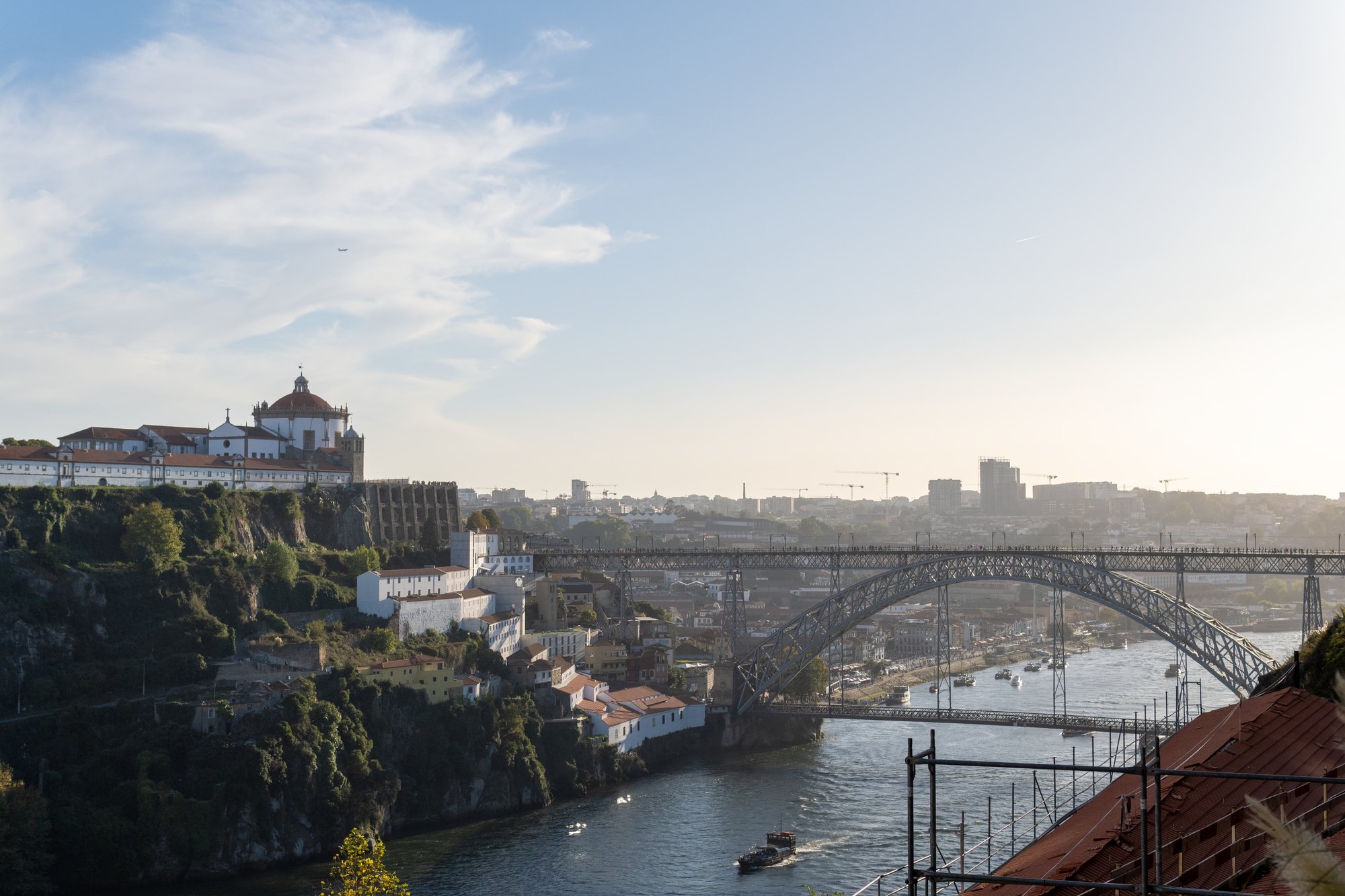
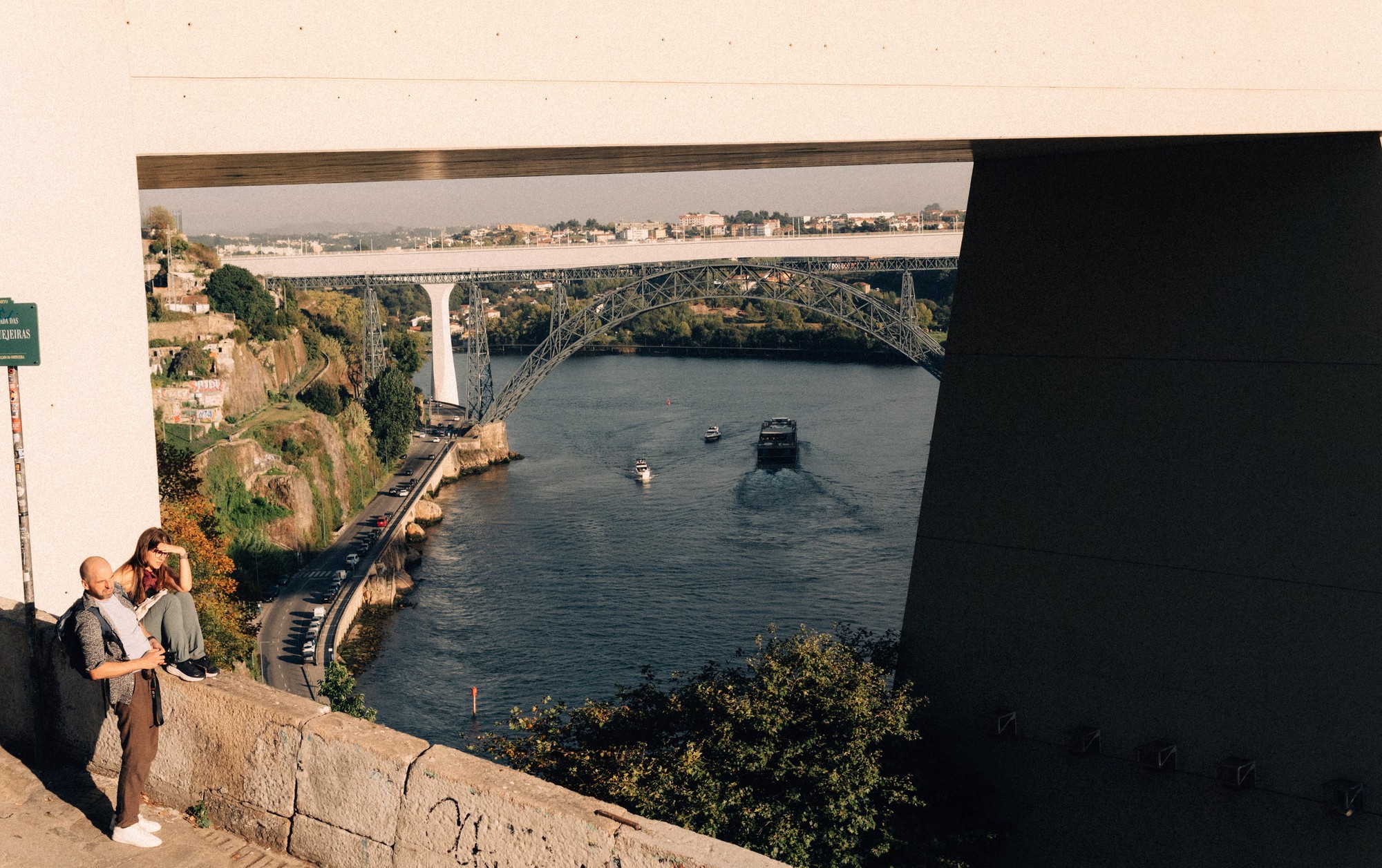
By six the light went long and gold, and everyone in the city seemed to walk to the same edge to watch it. We followed them to Fontainhas, a terrace that hangs over the river with the bridges stacked up in the distance, then out onto the top deck of the Dom Luís I, where the wind comes up the gorge and the whole city goes orange in about twenty minutes and then, very quickly, doesn’t.
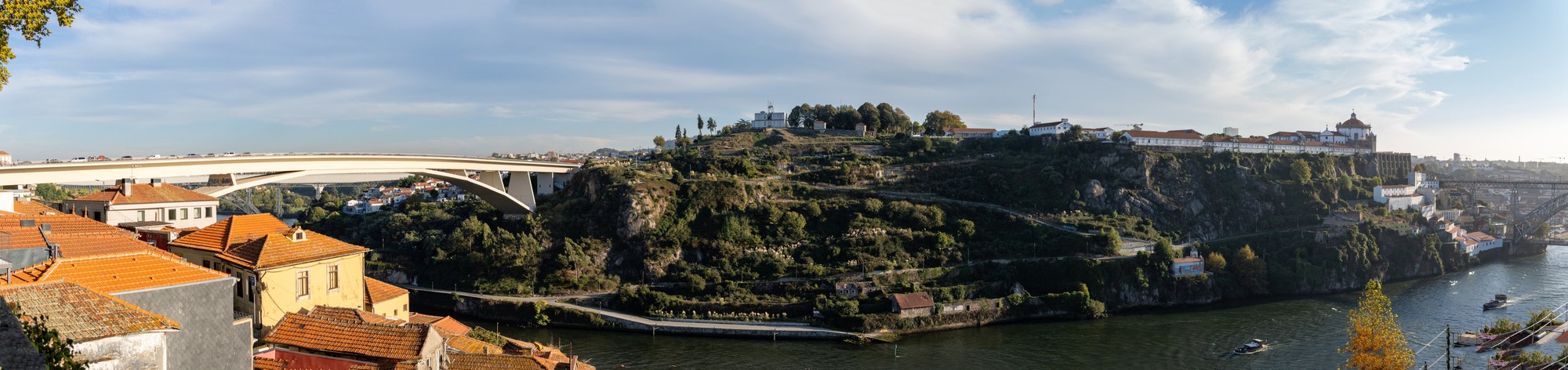
This is where I should talk about the lens. I bought the Sigma 30mm f/1.4 before the trip and it went on the Sony and never came off. I have owned cameras for thirteen, fourteen years now, through more lenses than I’d like an accountant to see, and this is my favourite of all of them. Nothing else comes close. It’s small and unglamorous and it sees almost exactly the way I do, a touch tighter than the eye, so that everything I point it at looks like I meant it. Most of what follows was shot through it.


We had dinner somewhere nearby, and on the walk back the moon came up over the river, huge and amber, a blood orange somebody had dropped in the black water. The cobbles were still giving the day’s heat back through the soles of our shoes. Every other doorway breathed something out – woodsmoke, charred sardine, burnt sugar – and from the high windows came cutlery, a radio, someone laughing at something we’d never hear the end of.
We came back, fought the elevator, and watched two episodes of a Japanese show called Hitorigoto Apron – roughly, Kitchen for Singles. An office worker lives alone in a cosy, slightly decrepit old apartment block, and in every episode she ties on her apron, puts a specific song on, and cooks dinner while grooving, chopping arrhythmically, and talking to herself. That is the whole show. I recommend it without reservation, and particularly with blocked ears, because a woman dicing an onion to a song you can only half-hear turns out to be precisely the right amount of television.
My ears were still closed when I fell asleep. The window was still broken. Neither of those things felt like the headline.
Clear, warm, the kind of September that forgets it's autumn. Ears blocked from the descent until well after dark. Eighty-eight frames anyway.
Tour groups crossing the park behind Clérigos, one guide after another, the same story in five languages.