The Sequel Trilogy Revisited
40 min read
Planted: 3 weeks ago
Last tended to: 3 weeks ago
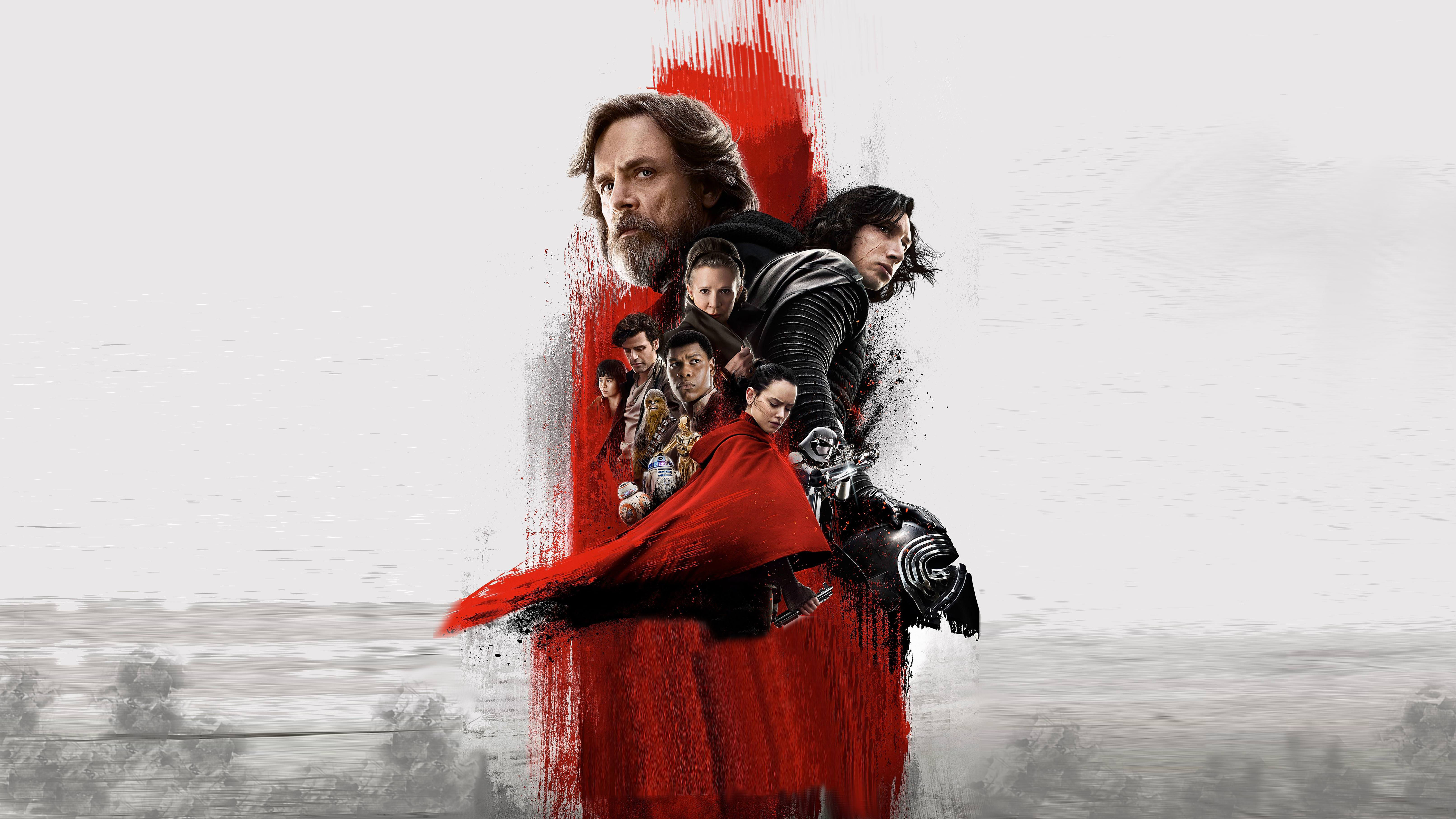
Image Credit: Star Wars: The Last Jedi 5K Wallpaper via HDQWalls
After The Acolyte rewrite, I couldn’t leave it at one show. The sequel trilogy has always bothered me for a different reason: not tone, but whiplash. Three different visions of the same nine characters, none of them talking to each other. So I gave myself the same exercise, at a larger scale: one writers’ room instead of three, working from a single outline across all three films, with the same people carrying it from Jakku to Exegol.
This is a full rewrite of the sequel trilogy, one continuity of vision instead of three. It keeps the broad shape everyone knows: Rey, Kylo, the First Order, Snoke, Palpatine’s shadow over all of it. What changes are the load-bearing choices underneath, and the willingness to let one film’s setup pay off in the next one instead of getting overwritten.
The one change everything else depends on: Ben Solo doesn’t kill Han. He raises the saber, he can’t do it, and he runs instead. That single swap changes the entire shape of his arc, from a betrayal that needs a redemptive death to atone for it, into someone caught between who he’s supposed to become and who he actually is, still reachable, still failing to reach back. Han lives into Episode VIII. Leia gets to be angry at her son instead of just grieving him.
A few other threads run the length of all three films. Rey’s Force sensitivity is planted honestly from her very first scene instead of held as a mystery box. Snoke is a real, present, physically dangerous character rather than a puzzle to be solved or discarded. There is no resurrected Palpatine, whatever is on Exegol is something worse: a system rather than a man. And nobody gets the last name Skywalker handed to them. They have to choose it, or choose something else.
The two people I kept imagining in the room with me were Tony Gilroy and Chloé Zhao, and once I let myself actually picture them there, the whole trilogy reshaped itself around what they’d each refuse to let through.
Gilroy is credited as head writer and story architect across all three scripts, the same role he effectively played on Rogue One and then made explicit with Andor: the person whose job is to make sure the institutions in the room are as real as the people. That means the First Order isn’t a black cape with a fleet attached to it. It’s an officer corps with career incentives, a recruitment and conscription apparatus that has to justify its own budget, a chain of command where a fanatic like Kylo Ren is not obviously in charge of a careerist like Hux, and where the two of them despising each other is a structural feature, not a personality clash. It means the New Republic Senate gets scenes before it gets destroyed, not just a headline casualty count, and that the choice to stay demilitarized reads as a specific, defensible, catastrophic policy position rather than an offscreen dumb decision made by nobody in particular. Gilroy’s rule, which I stole outright: if a character is a system’s instrument, give them a desk, a deadline, and a reason they’d tell you they’re one of the good ones.
Zhao directs the middle film outright, and the other two are shot to be in conversation with her, the way Empire’s chill sets the temperature for the whole original trilogy. Her camera doesn’t grant power, it earns proximity. Deserts, ice fields, salt flats: they’re not backdrops here, they’re characters with their own patience, and grief gets to move at the speed a body actually grieves at, not the speed a runtime allows. I kept coming back to Nomadland and The Rider while writing the Ahch-To and Crait material specifically, that sense of a person standing in a landscape too big to argue with, working something out that doesn’t resolve on cue. More on both of them in the Style tab, because it deserves its own space rather than a paragraph buried in the intro.
One structural promise before the beat sheets: nothing introduced in Episode VII gets discarded by Episode IX because a different set of hands picked up the script. Poe’s mutiny has to matter to who he is on Exegol. Hux’s resentment in the first film has to cash out somewhere. Rey’s compass has to still be in her pocket. It’s a low bar. It’s also the one the actual trilogy couldn’t clear, so it’s the first thing I asked the room to hold itself to.
What follows are summaries of the three films as I’d have shaped them, told the way I told The Acolyte’s seasons, beat by beat, with notes on the choices that mattered most.
The first film is set in the same immediate aftermath as the original: the New Republic exists, Luke Skywalker has vanished, and the First Order has grown in the shadow of a Republic that never fully demilitarized after the Empire’s fall. The core stakes are introductory. We are meeting nine characters and one galaxy at once, and the film’s job is to make all of it feel inevitable rather than assembled.

Jakku
Rey is introduced alone, a scavenger on a desert world, before the plot arrives to interrupt her. She has heard something calling to her for as long as she can remember, a presence at the edge of awareness that she’s always assumed was just the desert. The film plants this in her first scene rather than saving it as a third-act reveal: we feel what she doesn’t yet have language for.
This is the first place Zhao’s fingerprints show up even in a film she isn’t directing: Rey’s daily routine gets almost a full uninterrupted minute before anyone speaks. Climbing into a downed Star Destroyer with a headlamp and a portion scale. Trading scavenged parts for exactly enough food, no more, because more would mean something has changed and nothing has. Scratching another mark into the wall of her home, a ritual that’s clearly outlived any real belief that someone’s coming back. It’s not montage, it’s endurance, and the desert doesn’t soften for her the way desert vistas usually soften for a protagonist. It’s just heat and distance and the math of surviving another day of it.
Elsewhere on Jakku, Poe Dameron meets the village elder Lor San Tekka, who passes him a fragment of a map leading to Luke Skywalker’s location, hidden inside BB-8 moments before the First Order arrives. Kylo Ren’s forces are hunting that fragment specifically, and a First Order stormtrooper, designation FN-2187, is ordered to fire on unarmed villagers during the raid and refuses. His desertion is rooted in a specific moral failure rather than a vague crisis of conscience: he can’t pull the trigger, and he doesn’t yet know what that means about him. He takes the name Finn from the only fragment of identity he was ever given.
This is where Gilroy’s fingerprints show up just as early: the raid on Tuanul isn’t staged as an anonymous atrocity. We get thirty seconds inside the operation itself, an officer named Captain Bascha Tolvern reading conscription-efficiency numbers off a data pad to a superior even as the village burns behind her, worried less about the villagers than about whether this raid will look clean enough on the after-action report to justify the resources spent on it. She isn’t cruel for the sake of it. She’s ambitious inside a system that punishes hesitation and rewards throughput, and that’s precisely what makes her worse than a mustache-twirling officer would be. Finn’s refusal lands harder because we’ve just watched someone else, in the same uniform, refuse to refuse.
Kylo Ren, watching the aftermath from the ground rather than a viewscreen, is shown with a very specific tell: beneath his stillness, his hands are slightly clenched. He is afraid of what finding Luke Skywalker means, not just strategically, but personally, and the film plants that fear now so his later choices feel earned rather than sudden.
The Interrogation
Poe is captured before he can flee, and BB-8 escapes alone into the dunes carrying the map. Aboard Kylo’s flagship, the interrogation scene is rewritten around a single idea: Kylo doesn’t torture Poe for sport, he does it because he genuinely believes forcing the truth out cleanly is kinder than letting Poe hold onto a hope of resisting that can’t succeed. It’s a rationalization, and the film lets it be transparent as one, the same way Andor lets an interrogator believe his own procedure is the humane version of a brutal job. Poe, for his part, needles Kylo about the mask, and the flinch it produces is small and real, the first crack the audience sees in him.
Finn breaks Poe out under the pretense of needing a pilot, and the two escape in a stolen TIE fighter that’s shot down over the Jakku wastes before either of them can be honest about why the other matters to them yet. Finn wakes alone, takes Poe’s jacket believing him dead, and wanders into Rey’s story carrying a dead man’s name and a stranger’s kindness he hasn’t earned and doesn’t know how to return.
The Falcon and the Fleet
Rey and Finn’s escape from Jakku, BB-8 in tow, aboard a junked Corellian freighter that turns out to belong to Han Solo and Chewbacca, plays largely as it did on screen, but Han is written with more weight from his first scene. He isn’t comic relief who becomes serious later. He’s a man who has spent years running cargo specifically because it’s simpler than being anyone’s father, and Rey’s competence around the ship’s guts, unbidden and total, visibly unsettles him before he can name why.
On the Resistance side, we spend real time with Leia at D’Qar before the plot summons her into it, running a war room that’s smaller and more threadbare than the myth of the Resistance suggests: borrowed ships, volunteer pilots, intelligence assembled out of sympathetic Republic clerks who’d be shot for treason if anyone traced the leak back to them. This is deliberate. The Resistance in this telling isn’t the plucky remnant of a beloved institution, it’s the institution’s paranoid conscience, kept alive by people the New Republic Senate has quietly stopped funding because peace is popular and vigilance isn’t. Leia gets one scene with Senator Casian OEurdil, a genuine friend rather than a bureaucratic obstacle, who tells her plainly that he believes every word of her warnings and still can’t get her a single additional cruiser, because his colleagues have built entire careers on the idea that the war is over. It’s not villainy. It’s exhaustion mistaken for wisdom, and it’s what actually leaves the Republic undefended later in this film.
Takodana
Maz Kanata recognizes something in Rey before Rey does, and leads her to a lightsaber hidden beneath the castle, once Anakin’s, then Luke’s. The moment Rey touches it, she’s given a vision: not just fragments of the past, but a glimpse of a boy with dark hair whose face she can’t yet see, establishing her connection to Kylo through the story itself rather than announcing it later. The vision also carries something more personal to Rey, a memory of a child’s hand reaching for someone walking away. She’s been abandoned, and the presence calling to her has always felt like the opposite of that.
The First Order attacks before Rey can process any of it. Kylo Ren finds her at the edge of the woods and takes her, not because she’s dangerous, but because he recognizes something. He doesn’t capture her as a threat. He captures her because the Force called to both of them, and he doesn’t know what to do with that any more than she does.
Starkiller’s Ledger
Before we ever see the weapon fire, we spend a scene inside Starkiller Base’s targeting division, which exists mostly so the audience meets the people who’ll pull the trigger later before they pull it. A junior officer, assigned to the Hosnian firing sequence, asks a superior a version of a question Gilroy loves putting in an underling’s mouth: whether anyone’s confirmed civilian evacuation status for the target systems. He’s told that isn’t the division’s remit. It’s a small scene, easy to miss, and it’s meant to be, because that’s exactly how these things get done: not by one villain deciding, but by nobody’s job being to stop it.
The First Shot
Starkiller fires once, on Hosnian Prime, and Zhao’s instinct for restraint is applied to the single most spectacle-hungry moment in the whole trilogy: no triumphant tracking shot along the beam, no crosscut to panicking crowds for scale. We stay on the targeting division, on the junior officer from the ledger scene watching a status light change color and saying nothing, and then we cut away entirely, to Leia at D’Qar going suddenly and completely still mid-sentence, feeling the Republic’s political center die through the Force before any report reaches her. The scale of the loss, the Senate, the fleet, the seat of galactic government, is conveyed entirely through the size of what it does to one woman’s face. It’s the Alderaan beat this trilogy owes the original, and it’s paid in the same currency: silence, not spectacle.
The Duel Beneath the Weapon
Interrogated aboard Kylo’s flagship, Rey resists his attempt to read her mind and, in doing so, reads something of his in return: his fear that he’ll never measure up to Vader. It rattles him more than her resistance does.
Han Solo finds his son on a catwalk above the weapon’s reactor core. Their scene together is the hinge of the whole trilogy. Ben Solo, unmasked, admits he can still hear his mother, that Snoke never fully severed that connection, and that he’s afraid of what happens if he goes back to being Ben while Snoke is still in his head. When Han reaches out to him, Ben ignites his saber and offers Han the hilt rather than the blade, then stormtroopers arrive, and he runs rather than fights. He doesn’t kill his father. He can’t, and that failure to become what Snoke wants him to be is the engine of everything that follows.
Rey and Kylo meet in the snow afterward, and for the first time she feels the presence she’s heard her whole life settle into something like certainty, not calling her elsewhere, just confirming it has always been with her. She doesn’t win the duel that follows so much as she survives it with something he doesn’t have yet: stillness.
The Trench Run
Poe, recovered and furious about Hosnian Prime in a way that will define his whole arc across three films, leads the fighter assault on Starkiller’s oscillator with Finn talking him through the base’s schematics from the ground. The sequence plays close to the version we got, but Gilroy insisted the flight recorder chatter stay in: pilots calling out fuel numbers, requesting confirmation on abort thresholds, the specific bureaucracy of even a desperate suicide run. Heroism, in this trilogy, always has a checklist attached to it.
The base goes up before it can fire twice. It is, for now, the single unambiguous victory this trilogy allows itself, and it’s immediately undercut: Hosnian Prime is still gone, the Senate with it, and nothing about winning this battle un-loses that war.
Ahch-To
The film ends where the original did, with Rey finding Luke on Ahch-To, holding out his father’s saber. But his hesitation to take it is extended here rather than resolved. We end on the question, not the answer, and we ask it properly, so that the next film can spend real time earning the reply.
The second film picks up mid-crisis: the Resistance fleet, all that remains of any organized opposition to the First Order now that the Republic’s government is gone, is fleeing a pursuit it cannot outrun and cannot fight, and the story’s job is less to reverse expectations than to reveal how much of what looked separate in the first film was connected all along. This is the one Zhao directs, and it’s not a coincidence that it’s also the one where almost nobody wins anything cleanly.

The Chase
Poe opens the film with a reckless, brilliant strike against a First Order dreadnought, buying the fleet time to escape, at the cost of most of the Resistance’s remaining bombers. It’s framed as a victory that costs more than it earns, planting the seed of Poe’s arc: heroism without strategy is destruction wearing a different face, especially for a man still carrying Hosnian Prime like a debt he can only repay by winning louder next time. He won’t understand that for a while.
Snoke, revealed here in person rather than kept as a projection or a mystery, orders the fleet pursued rather than destroyed outright. Let them exhaust themselves in the running, then finish them when they’re alone. He is written as patient rather than theatrical, a villain who is more frightening for being understood than for being withheld. Kylo Ren stands at his side, hands slightly clenched again.
The Bridge
A First Order strike against the Resistance flagship’s bridge kills Admiral Ackbar and several senior officers outright, and blows Leia into open vacuum. She survives, pulled back through a door by a Force instinct she’s never had reason to name before, and the sequence is shot the way Zhao shoots everything that matters most: no music, no triumphant slow-motion return, just an old woman drifting in the dark and then, somehow, not drifting anymore. She’s alive, gravely injured, and unconscious for most of what follows. Command passes to Vice Admiral Amilyn Holdo, the fleet’s most senior surviving officer, and someone Poe has never served directly under.
Holdo’s Plan
Holdo declines to explain her evacuation strategy to Poe, freshly demoted for the dreadnought run’s cost, and this is given a full Gilroy-style command scene rather than played as a personality clash: she has legitimate operational reasons to withhold specifics from an officer she doesn’t yet trust with them, in a fleet she suspects has already been infiltrated by a First Order informant. She’s right to suspect that. She’s also, in withholding it, setting up exactly the vacuum of information Poe will try to fill himself. The film wants you to sit with both of those facts at once, that her caution is justified and that it still creates the conditions for disaster, rather than resolve them into a single clean lesson about trusting authority.
Ahch-To
Luke throws the lightsaber into the sea rather than take it, and the reason is reframed from the film we got: not detachment, but a specific unhealed wound. He tells Rey what actually happened the night he ignited his saber over his sleeping nephew, that it wasn’t a calculated threat assessment but a single moment of fear he couldn’t master, and that fear is what handed Snoke everything he needed to turn Ben. The Jedi tradition’s fatal flaw, in this telling, is that it teaches you to conquer fear rather than understand it, and Luke is not a monster for his mistake. He’s tragic for it.
Zhao’s instinct here was to slow the whole confession down past the point of comfort. Luke doesn’t deliver this as a speech. He starts it, stops, walks to the edge of a cliff and stands there long enough that the silence becomes its own kind of answer, and only picks the sentence back up once Rey has stopped expecting him to. The porgs get exactly one shot, a single unbothered creature watching two people fail to talk to each other properly, and then the film moves on. It isn’t there for charm. It’s there because the island doesn’t care what’s happening on it, and that’s the point.
A Force bond opens between Rey and Kylo during this stretch of the film, mutual and inexplicable to both of them, something neither the Jedi nor the Sith tradition has language for. Crucially, Snoke did not engineer it. It’s the Force itself doing something new, and neither character can fully explain or control it, which is the point: something is trying to happen that neither side’s doctrine anticipated.
Rey pushes Luke to actually teach her, and he does, but not by handing her certainty. He shows her the ancient Jedi texts and tells her plainly that they aren’t sacred, that the Order built a doctrine around the idea that light is right and dark is wrong and called it truth, when the Force itself takes no side. Learn from them, he says, and then go further than the Jedi ever dared.
Canto Bight
Finn’s subplot is reframed around purpose rather than escape, and it’s the section of the film Gilroy pushed hardest to expand, because a casino planet bankrolled by arms sales to both sides of a war is exactly his kind of scenery. Rose Tico, who lost her sister in the opening battle, doesn’t just stop Finn from fleeing, she walks him through the export ledgers of the very consortium that’s hosting the party upstairs: the same manufacturing conglomerates supplying First Order hardware are quietly supplying Resistance sympathizers too, at a markup, because a war is a market before it’s a cause to anyone with a controlling stake in it. It fails as a heist. It succeeds as an education. Finn learns what he’s actually fighting, which is bigger and duller and harder to shoot than the First Order alone.
DJ, the codebreaker they recruit, is given one genuinely persuasive scene arguing that loyalty is a luxury bought by people who’ve never had to sell information to survive, and the film doesn’t fully rebut him. It lets Finn and Rose walk away disagreeing with him and unable to fully dismiss him, which is closer to how that argument actually lands on someone young and freshly disillusioned.
The Mutiny
Poe, convinced Holdo intends to surrender or abandon ship, organizes a mutiny with Finn and a handful of sympathetic crew, seizing control long enough to launch the transport evacuation early. It’s framed unambiguously as a mistake, but a comprehensible one, made by someone who has spent his whole life believing initiative is a virtue that doesn’t need permission. DJ, captured during the Canto Bight sequence and released to sell what he knows, gives the First Order the transports’ location, and the resulting slaughter of fleeing personnel is the direct, traceable cost of Poe’s decision. Leia, conscious again, doesn’t shout at him. She’s quieter than that and worse for it, telling him plainly that he’s a fine pilot who nearly got everyone left in the galaxy killed being one, and that the difference between a hero and a liability is usually just whether someone senior to you survives to clean up after you. It’s the closest thing this trilogy has to a Gilroy-style dressing-down, delivered by someone who loves him.
Holdo’s Sacrifice
With the transports exposed and the flagship out of options, Holdo orders the remaining crew to the evacuation shuttles and stays behind alone, turning the cruiser and ramming it through Snoke’s flagship at lightspeed. The shot is held exactly as long as it needs to be and not a second longer, and it plays in total silence, no score, no impact sound, just the visual violence of it and then the abrupt hush afterward. It’s the single moment in the whole trilogy where Zhao’s instinct for indifferent, unhurried space and a genre-standard spectacle beat are the same shot at once, and it’s meant to be the thing you remember longest.
Crait
Rey confronts Snoke aboard his flagship and Kylo turns on his master mid-scene, an act of impulse rather than plan. It isn’t enough to kill Snoke, but it wounds him badly enough that he withdraws rather than risk himself further, leaving him alive and furious for the next film. Rey and Kylo fight the Praetorian Guard back to back, and afterward, when Kylo asks her to rule at his side rather than choose either faction, she refuses him without cruelty. People are dying. She leaves without him, and he is left standing at the edge of a choice he isn’t ready to make.
The salt flat battle plays largely as it did on screen, but Zhao insisted on the red mineral crust actually being disturbed and left disturbed. Every scorch mark, every skid trail from the speeders, every trench a walker’s tread cuts into the white surface stays visible in every subsequent shot from that scene forward. The battlefield accumulates its own memory in real time. It’s a small technical choice with a large emotional effect: you can see exactly how much has been paid by the time Luke walks out onto it.
Rose pulls Finn back from a suicidal last stand at Crait with a line that reorients the whole film’s ending: we don’t win by destroying what we hate, we win by protecting what we love. The film closes with Luke buying the fleeing Resistance time on Crait through a Force projection, a final scene with Kylo that ends not in violence but in an apology Luke has waited thirty years to give. He tells his nephew, gently, that he wasn’t the last Jedi, that this was never the point, and that Kylo already knows who is.
The third film is the one under the most pressure to reconcile two films’ worth of choices, and it does that by refusing easy shortcuts: no resurrection sprung from nowhere, no relationship resolved by a kiss and a death in the same scene, no legacy handed down instead of earned.

The Voice
A year has passed. The Resistance is smaller, leaner, and running out of options when every receiver in the galaxy lights up with a transmission in Palpatine’s voice, threatening a Final Order and naming sixteen worlds already marked for destruction. Rey, sensing it through the Force before anyone confirms it, says plainly that it isn’t him: it sounds like him, but it’s wrong, an echo pretending to be the original.
That distinction matters for everything that follows. What’s actually broadcasting from Exegol isn’t a resurrected Emperor but a system: an Imperial military project decades in the building, tended by a cult of true believers who kept his ideology running without him. The horror isn’t that one man cheated death. It’s that the Empire’s worst idea found a way to persist without needing him at all. Systems outlast individuals, and dogma is harder to kill than any person, which becomes the thematic spine of the whole finale.
Gilroy gets a full scene for the system’s human face: a career administrator named Overseer Rax Ittano, who has spent forty years maintaining the Exegol project’s supply lines and doctrinal purity through three changes of formal Imperial leadership and none at all in his own convictions. He’s not a fanatic in the theatrical sense, he’s a bureaucrat who has simply never had to answer for anything, and he gets one chilling line when a subordinate asks what happens once the Final Order launches and there’s no Emperor left to report to: “There hasn’t been one in decades. Have you noticed anything running less smoothly.”
Pasaana
Rey’s search for her own origins is answered here, definitively and deliberately smaller than the mythology built around it. She comes from no one famous. An elderly woman at a festival gives her a compass left by a Force-sensitive drifter Luke once briefly trained, someone who lived quietly and passed nothing on but this one object. Rey is simply the next in a long line of ordinary people the Force happened to need. The film treats this as an answer worth having, not a disappointment to be softened.
Kylo, still recovering from Snoke’s wound and now pursuing the transmission on his own initiative rather than his master’s orders, reaches Rey through their bond and admits, unusually honestly, that he doesn’t know what he’ll do if whatever is on Exegol offers him something he wants. That admission is new for him. It’s the first time in three films he tells her the truth before he understands why he’s telling her.
Kijimi
Kylo’s hunt for a wayfinder takes him back through his own First Order chain of command, and this is where Hux’s arc pays off. Hux has spent two films watching a mystic outrank a professional, and here he finally acts on it, feeding Resistance intelligence not out of conscience but out of pure institutional resentment, wanting Kylo to fail more than he wants the First Order to win. It’s a smaller, meaner motive than a redemption, and it’s more believable for it. Gilroy’s note on this scene was simple: nobody in an organization like this defects for the audience’s comfort, they defect because their own ambition got insulted.
Zorii Bliss’s history with Poe gets one real scene rather than a wink, establishing exactly what he owes her and exactly why she still helps him anyway, and it’s played with the same unhurried patience Zhao brought to Ahch-To: two people who used to matter to each other, standing in a doorway, not resolving it, just acknowledging it happened.
Exegol
They arrive separately and meet at the heart of the system that calls itself the Emperor’s Voice, which offers each of them a version of the same bargain: stand beside what comes next, so long as the other is destroyed first. Kylo refuses it outright, telling Rey that every legacy he’s ever been handed, Vader’s, the Empire’s, Snoke’s, has required him to destroy something he can’t bring himself to destroy. He is not fully Kylo Ren by this point and not yet only Ben Solo. He’s something between the two, choosing, for the first time, without an inheritance attached to the choice.
Leia’s death happens here rather than being pulled forward for scheduling reasons that never made sense inside the story. She reaches out through the Force one last time, not to save Ben’s life but to make sure the last thing he feels from her is her, not Snoke’s old distortion of her, not a memory he’s spent years mistrusting. It costs her everything she has left. It’s the single clearest use of the Force as an act of love in the whole trilogy, and it’s deliberately quiet, no swelling music cue, just Leia’s face and then Leia’s absence.
The Fleet Answers
Above the planet, the film pays off two films of earned goodwill: Leia’s call for help, sent to every world that ever quietly resented the First Order, brings not an army but people, farmers, freighter pilots, planetary defense forces that were never meant to leave their own systems. The galaxy shows up because the Resistance spent three films maintaining moral clarity even when it cost them, not because it was told to. Gilroy’s fingerprint on this sequence is the paperwork underneath it: half the ships that arrive are flying under civilian registries that will get their owners audited, sanctioned, or worse if the Final Order somehow survives the day, and they came anyway. Heroism here has a filing consequence.
The Dyad
Rey doesn’t defeat the Voice with a saber. She reaches into the Force to disrupt the one thing holding the system together, its certainty of its own inevitability, and the strain of it opens the door Palpatine’s cult has been counting on: rage is available to her, right there, enormous and easy, and for one extended, uncomfortable beat she starts to reach for it, channeling something closer to Sith lightning than anything a Jedi would recognize. What stops her isn’t willpower. It’s Ben, through the bond, not lecturing her back from it but simply there, steady, the way she’s been steady for him since the snow on Starkiller. She comes back from the edge because someone she trusts is standing at it with her, not because she found the correct doctrine in time. Overseer Ittano, to the end, keeps issuing procedural orders to a chain of command that has already stopped listening, a small, ugly, human detail Gilroy insisted on keeping in: even the end of a forty-year project gets processed like paperwork by the person who built his whole identity around processing it. The fleet’s command structure fails. The Voice goes silent.
What the strain costs Rey is real: she collapses, spent past the point her body can recover from alone. Ben reaches her, and this is the deliberate rewrite of the trilogy’s most famous cheat. He doesn’t die transferring his life into hers. He gives her enough to stabilize, the same kind of careful, costly, non-fatal Force healing Rey herself will later be shown teaching, and it leaves him wrecked and barely standing rather than gone. Redemption, in this telling, is something you have to be alive to keep choosing. A single grand sacrifice would let him off easier than that.
Aftermath
Ben Solo’s redemption doesn’t require his death. He survives, exhausted and present in a way he hasn’t been in years, and the film treats that survival as the harder and more honest arc: living with what he did and working, slowly, to repair it, rather than trading his life for absolution in a single scene. He and Rey end the film as allies who understand each other, not as a romance resolved in its final minutes. That, for now, is enough.
The closing image returns to Tatooine, where Rey plants both Luke’s and Leia’s sabers in the sand outside the old Lars homestead, not as a burial but as something meant to grow into whatever comes next. Zhao’s note on the final shot was to hold it long past the moment a trailer would cut away, long enough that the horizon starts to matter more than the sabers do. When a child asks who she is, she doesn’t reach for a borrowed surname. Skywalker was Luke’s answer to who he was: inherited, chosen, claimed. Rey’s answer is simply her own name, because she made herself, and that’s enough.
Visual Language
Zhao only directs the middle film outright, but her presence is the reason the whole trilogy looks like it’s being shot by people who trust the audience to sit still. The instinct I kept borrowing from Nomadland and The Rider is that a landscape doesn’t need to be beautiful to be doing emotional work, it needs to be indifferent. Jakku isn’t awe-inspiring in this version. It’s punishing, and the camera treats it the way it treats any place someone actually has to survive: without romance, without a hero shot, with the same unhurried patience it would give a parking lot if a parking lot were where the grief happened to live.
That indifference is the throughline. Ahch-To’s cliffs don’t perform serenity for Luke, they simply outlast him, the way they’ve outlasted every hermit before him. Crait’s salt flats don’t turn poetic under the walkers’ tread, they just keep a record, scar by scar, of everyone who bled on them that day. Exegol’s lightning doesn’t build to catharsis, it repeats, flat and mechanical, because a system doesn’t have a dramatic arc, it just runs until something stops it. None of these places care what the characters need from them. That’s precisely why standing in one of them, working something out, means something. Nobody helped.
Where this pulls against Zhao’s usual register is the First Order, and that’s deliberate. Institutional space in this trilogy is shot the way Gilroy’s Andor shoots an Imperial office: static, symmetrical, over-lit in a way that reads as clean rather than warm. Starkiller’s targeting division and Exegol’s command deck are the two spaces in the whole trilogy where the camera never once goes handheld, because handheld would suggest a human perspective, and both scenes are explicitly about how easy it becomes to stop having one. The contrast is the whole point. Every time the film cuts from an institutional interior back to open land, the frame itself exhales.
Faces get held longer than the genre usually allows for, another carryover from Zhao’s other work: Luke’s unfinished confession on the cliff edge, Leia watching Poe’s dreadnought run knowing exactly what it cost before anyone reports the number, Kylo’s hands, always the hands, clenched in every scene until Exegol, when for the first time they aren’t. Non-professional-actor energy isn’t literally possible in a cast this recognizable, but the note passed to every principal was the same one Zhao gives her actual amateur casts: don’t perform the emotion, just be tired enough, or scared enough, or old enough, that it shows up on its own.
A recurring color idea threads all three films without ever being pointed at: the muted, sun-bleached neutrals of Jakku and Pasaana keep resurfacing in small, wrong places later, a scrap of fabric on Crait, a panel of a downed transport on Exegol, the same way Brendok’s palette kept resurfacing in The Acolyte. It’s never commented on. It’s just there, quietly insisting that this is one continuous world rather than three separate production designs wearing the same costumes.
Political Texture and Sound
Gilroy’s contribution is less visual than structural, but it changes how every scene sounds. Institutional dialogue in this trilogy is written the way Andor writes a status meeting: full of the specific, boring, real vocabulary of an organization protecting itself, requisition timelines, efficiency reports, deniability built into the phrasing before anyone’s even lying yet. The First Order’s officer corps talks like an officer corps. The New Republic Senate talks like a legislature more afraid of a headline than a threat. When Overseer Ittano says there hasn’t been an Emperor in decades and nothing’s run less smoothly, it’s meant to land the way Andor’s best lines land: quietly, procedurally, and only horrifying once you’ve had a second to do the math yourself.
Music stays closer to Williams than The Acolyte’s more textural approach, this is still a trilogy that wants its themes to swell, but the swells are rationed more carefully. Institutional scenes get almost no score at all, just room tone and the hum of equipment, so that the rare cue that does show up, Leia’s theme returning in her final scene, the Force theme finally resolving on Exegol, means something because the film has spent two and a half hours training you not to expect it. Holdo’s sacrifice is the one deliberate exception that proves the rule: total silence, not even ambient hum, the single quietest moment the trilogy allows itself for its single loudest sacrifice.
Silence, here, isn’t a Burial-style withholding the way it was on The Acolyte. It’s closer to what Zhao does with ambient sound in her own films: wind, distance, the specific quiet of a place that was never built to comfort anyone standing in it.
Questions long-time fans might ask
From original trilogy fans
Why does the First Order get this much bureaucracy? I came for laser swords.
The laser swords are still here. But the Empire in the original trilogy worked precisely because it felt like a machine with people trapped inside it, not just a flag. Giving the First Order the same texture, requisitions, conscription quotas, an officer who worries about his after-action report while a village burns, isn’t a detour from the original trilogy’s DNA. It’s a return to it. Vader was terrifying because he answered to someone. So does Hux.
Does Han really need to survive into the second film? That changes a lot.
It changes everything downstream of it, which is the point. The original trilogy earned Vader’s redemption over three films of buildup. Ben Solo deserved the same runway instead of being asked to carry a father’s death and a redemption arc inside a single frantic finale. Han living longer means Leia gets to be a mother who’s furious instead of only one who’s grieving, and it means the family gets one more chance to fail each other in a way that actually costs something.
From prequel trilogy fans
Doesn’t a “system rather than a man” on Exegol undercut the whole idea of a single tempter, which is basically the entire prequel trilogy’s thesis?
It’s meant to be a rhyme, not a contradiction. Palpatine himself was always both: a singular manipulator and the beneficiary of institutions that let one man accumulate that much unchecked power. By the sequel era, the man is gone and the institution he built is still running on its own logic, unsupervised, because nobody with the authority to stop it ever had the will to. That’s not a departure from the prequels’ warning. It’s what happens forty years after nobody heeded it.
Why does Kylo Ren get more sympathy than Vader ever did at this stage of his arc?
He doesn’t get more forgiveness, he gets more visible cost. Vader’s turn was mythic, operatic, mostly offscreen by the time we meet him again. Ben Solo’s turn happens in real time, in front of us, and the film is interested in showing the specific, ongoing effort it takes not to finish becoming what he’s expected to be. That’s a harder thing to dramatize than a fall. It’s a stall, sustained across three films, and stalls don’t get the dignity of a clean redemption arc, they get Hux resenting him for two and a half hours instead.
From sequel trilogy defenders
Isn’t “Rey comes from nobody” exactly what the original film already said, and exactly what got walked back?
Yes, and this version keeps the walk-back from ever happening by making the “nobody” answer specific and textured instead of a shrug. She isn’t nobody as an absence of story, she’s the last link in a small, real, unglamorous lineage of Force-sensitive drifters who never mattered to galactic history and were never going to. The emptiness of her parentage isn’t the point. The abandonment is, and that stays exactly where the first film planted it.
Doesn’t cutting the romance resolution shortchange Rey and Kylo’s whole arc?
It reframes it rather than cutting it. Their arc was never really about romance, it was about two people the Force forced into proximity against both their wills, who spend three films learning to actually see each other. Ending that as a hard-won, unresolved kind of understanding, rather than a kiss immediately followed by a death, treats the bond as something worth continuing to live inside rather than something that needed to be spent to be meaningful.
Doesn’t letting Ben survive undercut the tragedy of his arc?
Only if tragedy requires a body. The actual tragedy of Ben Solo was always that he spent years being told the only way out was through someone else’s death, his father’s, his master’s, eventually his own. Letting him live with what he did, under the people he hurt, is a harder ending to earn than a martyrdom, not a softer one.
From Andor fans specifically
Is this just Andor with lightsabers stapled on?
No, and this comes up in the Acolyte piece too because it’s worth repeating: Andor is a study of how resistance forms, patiently, out of ordinary compromised people. This trilogy stays a myth about a chosen family finding each other across a galaxy, it just refuses to let the institutions around that myth be cardboard. Ittano and Tolvern and Hux aren’t the protagonists. They’re the reason the protagonists’ choices cost what they cost.
Why bring in Zhao instead of leaning fully into Gilroy’s register for all three films?
Because a trilogy that’s institutional all the way down stops being this trilogy. The Skywalker saga has always been a family myth first. Gilroy’s job is to make sure the machinery around that myth is honest. Zhao’s job is to make sure the myth itself still gets room to breathe, unhurried, in landscapes that don’t perform meaning for the camera. You need both, or you get either a lecture or a fairy tale, and this story has always tried to be both at once, badly, across three separate directors. I just wanted the same two sensibilities held by hand across all nine hours instead of reinvented from scratch every time.
What this rewrite refuses to do
It refuses to fix the sequel trilogy by making it cleverer than it needs to be. There’s no hidden puppet master behind all nine years of decisions, no retroactive master plan. The whiplash the actual trilogy has is real and it doesn’t get papered over with a twist, it gets solved the boring way, by one outline instead of three.
It refuses to let institutional texture become the whole point. Gilroy’s chain of command and Hux’s resentment and Ittano’s paperwork exist to make the galaxy feel inhabited, not to turn this into a treatise. The moment a scene starts explaining its own themes out loud, it’s been cut.
It refuses to sand down Poe’s mutiny into a clean lesson about trusting your commanding officer. Holdo was right to be cautious and still created the conditions for the disaster. Poe was wrong and his instincts aren’t wrong every other time. Both of those stay true at once.
It refuses to let a single grand sacrifice do the emotional work that sustained repair should be doing instead. Ben doesn’t get to die his way out of what he did. Living with it, in front of the people he hurt, is the harder sentence, and the film makes him serve it.
It refuses to make Rey’s parentage a twist worth building an act around. Nobody is the answer, and the film spends its time on what that abandonment did to her rather than on the reveal itself.
It refuses to resolve the Rey and Kylo bond through romance as a finish line. What they have by the end is understanding, hard-won and unfinished, and the film trusts that as an ending on its own terms.
Most of all, it refuses to pretend three directors’ worth of contradictions can be waved away by one more twist in the final act. The fix here isn’t a bigger revelation. It’s continuity, held by the same two sensibilities from the first frame to the last.
Personal epilogue
I went back to the sequel trilogy for the same reason I went back to The Acolyte: not to punish it, but because something in it still hasn’t let go of me, three different visions and all.
Gilroy and Zhao aren’t in here because they’re fashionable to invoke this year. They’re in here because they’re the two working directions I keep wanting Star Wars to hold at once and rarely sees it manage: institutions honest enough to explain how the myth keeps happening, and a camera patient enough to let the myth still feel like one. Andor proved the first is possible inside this universe. Nomadland and The Rider are why I trust the second belongs here too, even if nobody’s actually going to let either of them near a lightsaber.
This isn’t the definitive fix for nine hours that three different rooms built without talking to each other. It’s one continuity of vision instead of three, which was always the only thing actually missing.
If it works, it’s because Han still doesn’t get killed for spectacle, Rey still comes from nobody and it still costs her something, and Ben still has to live with what he did instead of buying it back in a single scene. If it doesn’t work for everyone, that’s fine. The actual trilogy didn’t either, and at least this version knows what it’s arguing for.