Nobody's Home
18 min read
Planted: 2 months ago
Last tended to: 2 weeks ago
Intoxicating Water
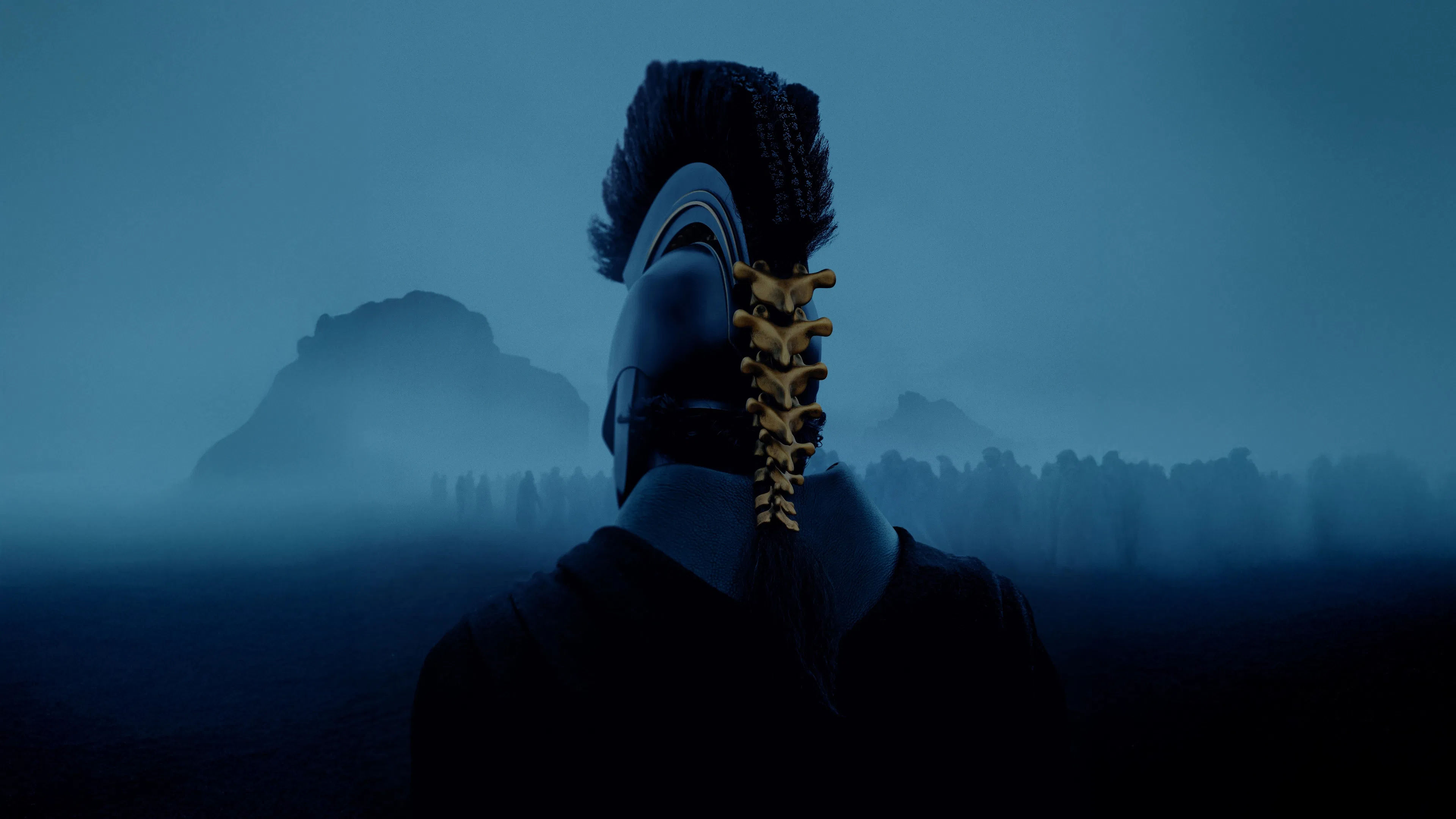
The boldest thing in Christopher Nolan’s new big-budget theater experience…is not on screen. It is a decision about the historical record: the largest genuine blank space in ancient history, filled in with its own protagonists. The Sea Peoples are real in the narrow sense that the destruction attributed to them is real (thank you, Fall of Civilizations book). To wit, the mortuary temple of Ramesses III at Medinet Habu catalogues an invasion in relief carvings cut deep enough into the stone to survive three thousand years of desert wind. Ships hold formation while men spill out of them mid-collapse, and behind both, coalitions of raiders are named only in Egyptian approximations that match nothing else in the record. Then the record simply stops supplying identities. For a century, historians have argued over who they were, and the honest answer remains that nobody knows: one thread among drought, earthquake clusters, internal revolt, and cascading systems failure in the collapse that took down an entire interconnected Mediterranean world around 1200 BCE, palace economies, trade networks, and, in some places, writing itself, gone for centuries. Thus, it can be reasonably inferred that the Sea Peoples are less a people than a label the survivors attached to the shape of their fear.
Nolan’s film fills that blank with its own heroes. The reveal is delivered as a theory, hedged, in dialogue, Odysseus flat-out says it, and it is spoken toward the one character with the least motive to want it true. Penelope (who at this point doesn’t know it’s him) does the arithmetic on her husband’s confession faster than he can finish making it, in the dark, close enough that he can’t watch her arrive at it: the raiders whose rumor has hung over Ithaca for a decade, the reason the suitor crisis is an emergency rather than an insult, and the offshore dread the whole Mediterranean has been bracing against are the veterans of Troy.
You are the people from the sea.
Her line lands as recognition, not revelation, because the film has already shown you things were and trusted you to run it yourself: men sacking their way home island by island, hearing on every coastline the rumor of monsters from the water, never once recognizing the rumor as a mirror.
Odysseus remarks, almost offhand, that the war will survive only as song, because song is the only way anyone will remember the men who could have written about it. The people with the standing to correct the record – the lords, the generals, the literate class that marched to Troy – largely never came home to write anything; the film’s Ithaca, leaderless and circling, is one island’s version of a Mediterranean-wide decapitation. What remains to explain a civilizational collapse is a bard’s performance and a decade of traveling rumor, carried by survivors who needed the story to be about someone else’s cruelty. This is trauma as historiography. The men who did the sacking told it as something done to them because that was the only version any of them could survive telling, and the rumor they seeded, strangers from the sea, lawless and merciless, travelled faster than they did, breaking trust and trade ahead of their own ships. The record remained blank because everyone who might have told it straight, didn’t live to be believed, and everyone who lived had many, many reasons to lie.
Pinning the Bronze Age Collapse on one battle/war is a compression - no serious account of the actual collapse rests on a single cause - but the claim arrives as one tortured man’s theory of his own guilt, not narration-of-record, which is its own kind of honesty about the compression. Odysseus believes he ended civilization because believing it is the shape his moral injury takes. Whether the history holds matters less than how precisely the psychology tracks. Veterans of every war since have carried some version of the same conviction: that the thing they did was the hinge the world broke on.
Original Sin
Xenia, the ancient Greek concept of hospitality or ritualized friendship, served as important infrastructure. In a Mediterranean world without a shared government — treaties existed, but they weren’t worth the clay they were pressed into, and reputation was the only thing enforcing any of it — the guest-law – feed the stranger and wash the road-dust off their feet before you ask their name, because they might be a beggar and they might be a god wearing a beggar – was the bedrock of trust between peoples. Every ship that beached on a foreign coast was a test of it. Every palace that fed a traveler was a node in it. The gods’ involvement was not decoration; divine punishment was the only court of appeal the system had. Zeus Xenios, protector of guests, was what you invoked instead of a navy.
The Trojan Horse is a very interesting exploit written against that exact system. Not a trick in the generic sense, but rather specific weaponization of the obligation to receive. A gift you are religiously required to accept: carrying the men who will burn your city. Nolan grasps this precisely, which is why the horse keeps returning in flames, smoke thick enough to blacken the men standing close enough to watch it burn, four or five times across the runtime, unexplained until the confession scene assigns the image its weight. Odysseus’s own reckoning names it more precisely: the catastrophe was the horse working. Once the guest-law is broken successfully (and gloriously), and the breaking is sung across every court in the known world as the greatest cleverness of the age, the law’s deterrent value dies for everyone. A trust system doesn’t collapse when someone commits its worst violation. It collapses when someone commits a violation just justified enough to be celebrated, and the celebration turns the exception into the precedent. Every subsequent host who hesitates at the door, every coastal village that greets a sail with spears instead of bread, is running the correct update. The cunning of the Mycenaeans, glorified in song, was also the announcement that the operating system had been rooted.
Agamemnon, in Hades, rehearses this blindness at human scale, a handful of minutes of screen time, before the civilizational version gets charged to Odysseus. Dead only days: murdered by his own wife the moment he crossed his own threshold, the homecoming that is the Odyssey’s dark twin. The imposing man (with my next great cosplay idea) greets the protagonist like a loyal general. He offers him a stiff, warm embrace, dispenses advice about the trap he himself fell into, and notes that Odysseus would never have been caught so easily. He is entirely unaware that the man in front of him is frightened of him and staying only long enough to be polite. Here is a king who cannot, even in the underworld, even with his own murder as the evidence, imagine consequence arriving for anything he has done. Agamemnon is the small version, so you recognize the shape when it comes back wearing Odysseus’s face: the same inability to see oneself in the wreckage, scaled from one hall to the whole sea. It’s the strongest sustained image here — a flat, day-for-night emptiness closer to Death Stranding’s beaches and visual flourish than to any Christian hell, punishment stripped out and only absence left standing, warriors learning too late what valor was worth. Nolan has never made a horror film, and this sequence suggests he has simply been saving it. While I hope he makes one.
Just Ants
Nolan told the LA Times the Cyclops came out of a conversation with Guillermo del Toro, built on the idea that a monster should have the same interiority as any other character. Push that idea one step further: a monster built with full interiority still doesn’t experience itself as monstrous. It doesn’t see itself terrorizing people, because it doesn’t register us as people at all. The Cyclops sequence renders it exactly. Polyphemus can speak, the demonstration exists for no reason except to be witnessed, and then never once addresses the men trapped in a cave that smells of animal and old blood, because speech implies the other party is someone you might owe an answer. In the poem, the Cyclops converses, boasts, and curses; his cruelty is social. Here, he treats the crew as non-sentient food, and the horror is the indifference, not the appetite. Odysseus explains the silence to his own men with an analogy: “would they stop to talk to ants?” The creature’s design pulls directly from Goya’s Saturn Devouring His Son – Nolan kept it on the wall through production, the first reference shown to any new effects vendor – a god eating his child out of blank, animal terror rather than malice, something ancient and starving that has stopped recognizing a category of being it once belonged to.
The acclaimed director never states the obvious next clause, because he doesn’t need to. Odysseus and his crew run the same protocol on every island between the horse and home. Hunger drives the raiding, desperation drives the taking, and guest-law gets broken over and over by men just trying to get back home…and everyone in the way is, functionally, ants. The terror they leave behind is exactly what gets summarized, a few coastlines later, as people from the sea are coming. Nobody in this story experiences themselves as the thing everyone else is afraid of, and that blindness runs in both directions — the Cyclops never feels it, and neither does Odysseus. The monster and the hero share one perceptual failure, aimed in opposite directions, and the whole moral architecture here rests on the audience noticing what neither of them can.
The casting backlash was almost too neat to be accidental. It landed, with the precision these things always have, on the actors playing the strangers — Zendaya’s goddess spends the whole story disguised as someone else, Lupita Nyong’o gets Helen, and Travis Scott plays the bard, the figure who carries the war into the only record that outlives its witnesses. Nolan’s stated reasoning for the last of these, that rap and oral poetry are one practice under different weather, is absolutely correct, and it lands harder for me than for most reviewers since a griot tradition is very important to me. (Note that Travis is still not much of a rapper. Sharper choices were available. Both things are true at once.) But the shape of the objection is the thing worth keeping: a poem engineered across three thousand years to discipline people out of turning away the stranger at the door, arriving in front of an audience that took one look at the strangers and reached for the door. The suitors believed they had more claim to that hall than the people who actually belonged in it. Ahh, human impulses.
Wisdom, Warfare & Handicraft
Zendaya is the only god given a face at all, and the reveal buried in that face reorganizes everything around it: Athena appears to Odysseus in the form of a woman he watched being dragged by the wrist across the stone floor of Athena’s own temple during the sack of Troy. She’s never named; everything about her positioning says Cassandra. Odysseus is hallucinating a goddess. Odysseus is guilt-conjuring a specific woman he failed to save. Athena took the dead woman’s form deliberately when she came to him after Troy because that was the shape his attention could not bear to refuse. And underneath all four, the reading the poem’s own founding law makes available: the woman in the temple was Athena all along, mistreat no stranger, because any stranger might be a god in disguise, which would mean the sack of Troy included the assault of a goddess in her own sanctuary, witnessed by the man she then chose, or sentenced, to accompany home.
None of these get ranked, and the refusal is not indecision. The nearest frame I have for it is anekantavada, the Jain doctrine of many-sidedness: a claim can be entirely true from one standpoint and entirely true from an incompatible standpoint, and the falsehood enters only once you insist it’s the only one. Under it, the question “is Athena real” is malformed. She is a goddess in one reading, a symptom in another, a guilt object in a third, and a disguise in a fourth – each reading complete on its own, none of them canceling the others out – and Odysseus’s sanity or piety cannot be settled without flattening a man the film has spent its whole runtime refusing to flatten. This doubles, exactly, as the clinical shape of moral injury: the visitations arrive when he is alone, sleep-broken, grieving, and watching men he was responsible for die one boat at a time, precisely the conditions under which a mind manufactures a sensed presence, a protector who was there the whole time, to make an unsurvivable record survivable. Guided or haunted stops being a distinction. The protector and the accuser wear the same face, because the face belongs to the person he failed.
The device that makes all of this land in the theater rather than the seminar room is a repeated compliment. Telemachus, more than once, looks a stranger full in the face and tells them they have “the eyes of Athena”. He is describing the actual goddess standing in front of him without knowing it — the audience is the only one in the room who catches it. The first time, it plays as tenderness, a boy raised on his absent father’s stories, seeing the divine in ordinary kindness. The second time, with the temple reveal behind it, the same line carries the full weight of the argument built underneath it: that the gods were always encountered exactly this way, as a face in front of you that you failed to recognize, and that the recognition arriving too late is not a failure of piety but the ordinary condition of knowing anything at all. It costs nothing the first time. It costs everything the second.
The dialogue is plain and contemporary, and has been called clunky for the same reason Emily Wilson’s 2017 translation — the one Nolan has said he leaned on hardest — was attacked when it published, dismissed as too plain, too contemporary for the material, not dressed up enough to sound like an epic. Wilson’s answer was that Homer’s Greek is not ornate to a Greek ear; the elevation is a residue of translators, not a property of the poem, and choosing plainness is a fidelity, not a failure of nerve. A film that won’t give its gods a legible face and a translation that won’t give its hero an elevated voice are running the same refusal. This is not an adaptation of an epic poem so much as an examination of a civilization’s operating values through one tortured man, and the plainness is what lets the examination reach you without costume. I wholeheartedly agree with this, and I don’t understand why we have decided that elevated language and British accents are musts for epics.
Nostos, or the Never Given Myth
Strip out the monsters and the poem’s engine is nostos: one specific man, returning to one specific island, to one specific woman who spent twenty years not becoming anyone else. Homecoming isn’t a theme of the Odyssey so much as its engine — the destination every hexameter was built to reach.The man who receives the homecoming manufactured the displacement crisis his own kingdom spent the story bracing against. He arrives a refugee-maker mistaken by his own people for the refugees, and he collects anyway – the island, the hall, the wife unmoved at her loom, still pulling out by night the same thread she wove by day. The poem itself refuses to let the everything resolve cleanly: Book 22 ends with Telemachus hanging twelve enslaved women from the same roof beams the suitors had feasted under for years, women the suitors used and who held no power of refusal, executed for a shame that was never theirs to carry. Wilson renders the moment before their deaths as doves flying into a net, wings beating against the rope, unable to reach home – and spent much of her public career pointing out that a century of English translators called these women maids, sluts, and disobedient, anything except what the Greek plainly says they were: slaves. Property.
Homecoming, in the founding homecoming story of the entire Western tradition, was never universal. It was built for exactly one man, and every other person in his story was denominated in toll. Dressing its own aggressors in the identity of history’s most famous nameless victims is the central move — and it’s civilizational: an actually erased people, the one population of the Bronze Age we cannot name because no one recorded them as anything but a fear, borrowed as a costume for the men who did the erasing. I keep turning over whether that move costs the audience anything or just entertains them with the sensation of cost. Penelope’s face during the confession argues one way, and the camera lens holds on it long enough to make the recognition unbearable. Odysseus keeping everything anyway argues the other, and so does the audience, watching for entertainment what she has to sit inside as fact. I can’t really point it to one way over the other. I don’t think the film can either, and I trust it more for not pretending to.
The Deep keeps surfacing for me here, for reasons that have nothing to do with Odysseus. Rivers Solomon and Daveed Diggs built a cosmology out of the drowned (note that this mythology was not invented by them): descendants of pregnant African women thrown overboard mid-crossing evolved across generations into a people who breathe water. No island waits at the end of that story, because none was ever meant to. The home was destroyed on purpose before the story started, and the myth that grows from that fact is not about getting back to something; it is about what a people become when back was never on the table. Set beside nostos, that asymmetry is what the comparison was for all along. One tradition’s aggressors get to come home and get their crimes translated into cleverness for three millennia, and now get to borrow the costume of their own victims for the price of a ticket. The other tradition’s dead got no redemption arc and no mistranslation because nobody wrote their names down to get wrong.
I said at the top who this piece assumes you are: someone who has read the poem, or seen the film, or both. I have done one of those things. I liked Greek mythology fiercely as a kid, the way you like the first system anyone hands you, and somewhere in my twenties I drifted, Egyptian cosmology, then Norse, then further out, into everything that was not the three canons a Western education issues by default and calls universal. I have never read the Odyssey (beyond the research for this piece). Not the Wilson, not the Fagles, not the Fitzgerald. Almost everything I know about the loom, the cave, the doves in the net, and now the sea people who turn out to be the men rowing the boat, I know the way Ithaca knew the sea people: secondhand, through rumor and song and other people’s tellings, assembled into a shape I have decided to trust – closer, if anything, to the wall at Medinet Habu than to any page: ships cut into stone, no names attached to either side, a record built entirely out of what the survivors were willing to admit. Three hours of runtime spent arguing that this is the only way anyone has ever known anything this old – that the gods were weather, the record was song, and by the time either reached us, the witnesses were already dead. I never had to read a line of Homer to know that feeling. I got there a different way.
I still haven’t. Some nights that feels like a discipline I chose. Other nights it just feels like I never had an island worth the ten-year trip.
CINEMA, STREAM OR SKIP: Watch it yesterday. On a giant screen.
Addendum
- The siren scene: between a rock and a hard place. Hell yeah. I can be simple like that.
- Powerhouse performances from the entire cast. -whistles-
- Elliot Page -double whistles-
- The first twenty minutes of sound mixing had me bracing for a second Tenet. I like Tenet though.
- Ludwig Goransson’s parents knew exactly what they were doing when they named him. Incredible Midas’ touch.
- I do not have Benny Safdie’s muscles, but I am absolutely dressing up as Agamemnon for Halloween.